
Wanderstop: When Labor is Purpose, Play Ceases to Exist
A game about the fleeting nature of existence cannot trust its own players.

When I heard Davey Wreden, the writer behind works like The Stanley Parable and The Beginner’s Guide, was releasing a cozy game about making tea, I was incredulous. Both games are giant influences on my life and utilize video games as a medium to tell a unique story. The first a self-referential absurdist comedy, the second a raw emotional journey through creative shame spiraling.
Those games are filled with drama, tension, and most of all intrigue. Like Lucas Pope and Kaizen Game Works, the storytelling craft executed through his games is what propels the medium forward. But Wreden finds great purpose in his work as evidenced by his essay and comic about grappling with success, a level of personal investment that can only be evident when you make your real-life self both the protagonist and villain of your sophomore game.
Wanderstop is thematically about presence, trauma, and failure, but it’s mostly about a market trend. “Cozy games” as a genre term has been thrown around for several years now, with farming/life simulation games front and center. Wanderstop is a sincere addition to the backlash. Stardew Valley and Animal Crossing take gamification on a low-stakes trajetory to not give players a sense of accomplishment as much as satisfaction and peace. Those games sacrifice narrative impact by utilizing self-insert characters for immersion and allows for the ultimate power fantasy of infinite simluated life.
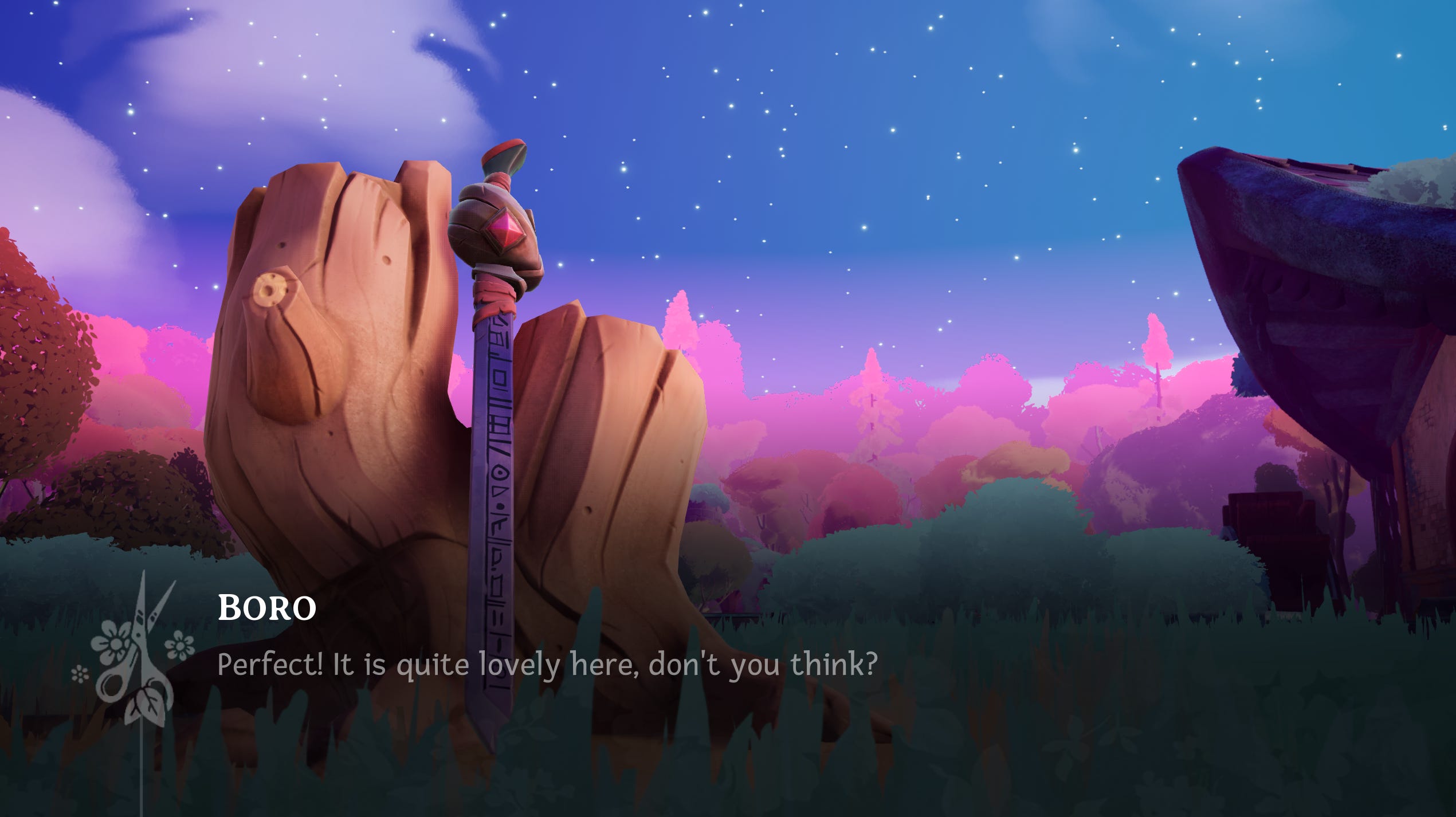
Enter our main character, Atla. Her singular purpose is fighting and winning: she was born to do one thing, fight. She never loses. But then she does and gets stuck making tea. She’s an unwilling participant for our first few hours, and a whiner at that. The dialogue is quippy and well written, but she’s insufferable about how much she needs to be pursuing her life’s goal. The only reason she is in Wanderstop is her sword has become “heavy”, too difficult to lift to nobody but herself. She’s accompanied by Boro, a jovial warm hug of a bald man.
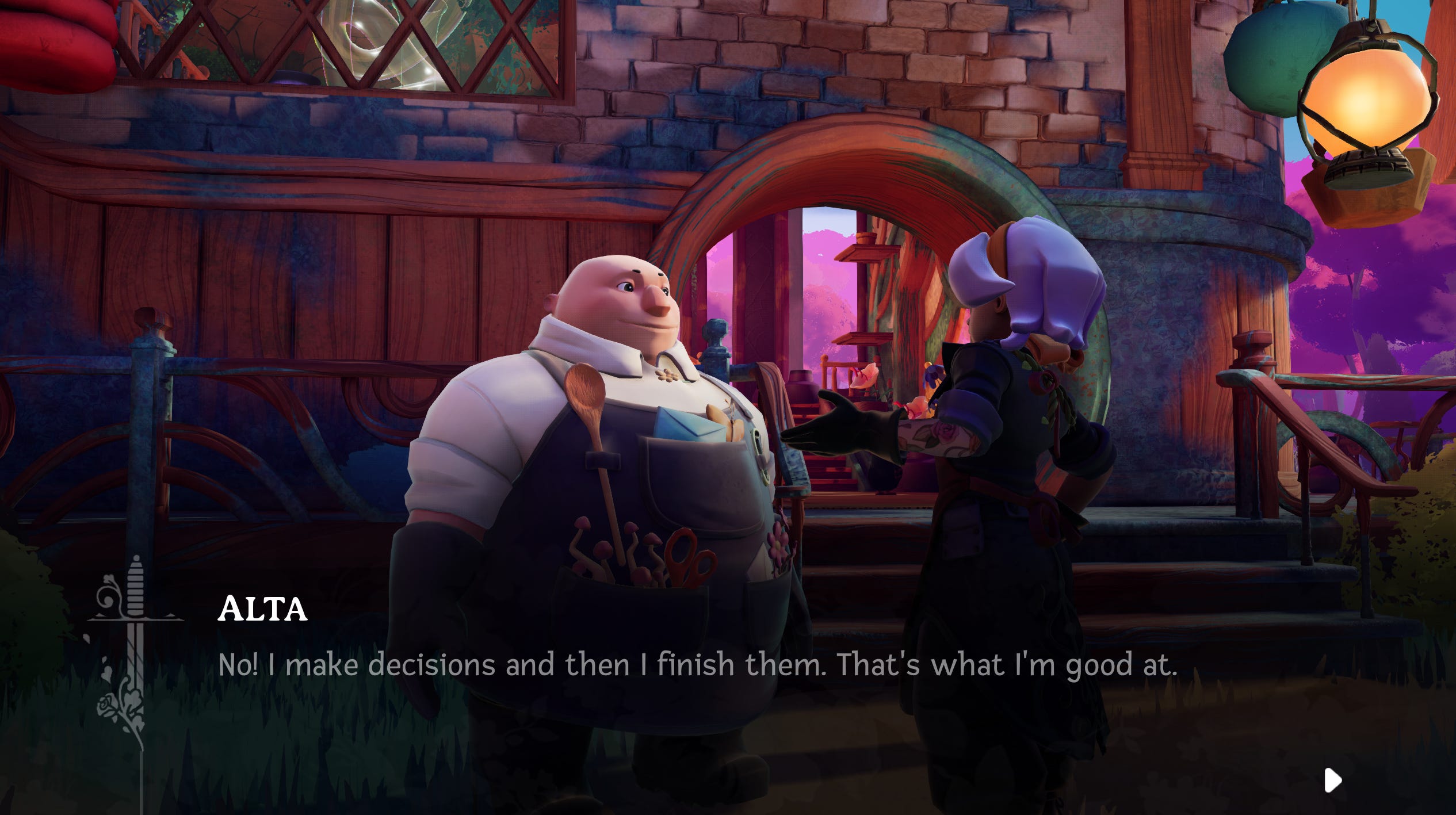
It’s a heavy-handed metaphor for labor and burnout. Blending this cozy game with a stereotypical game protagonist asks the player to quit their objective. Even the systems ask you to slow down: every button press takes a little longer than what might be considered necessary, seasons change and erase all your progress, and all the while Atla is told to trust the process and take their time.
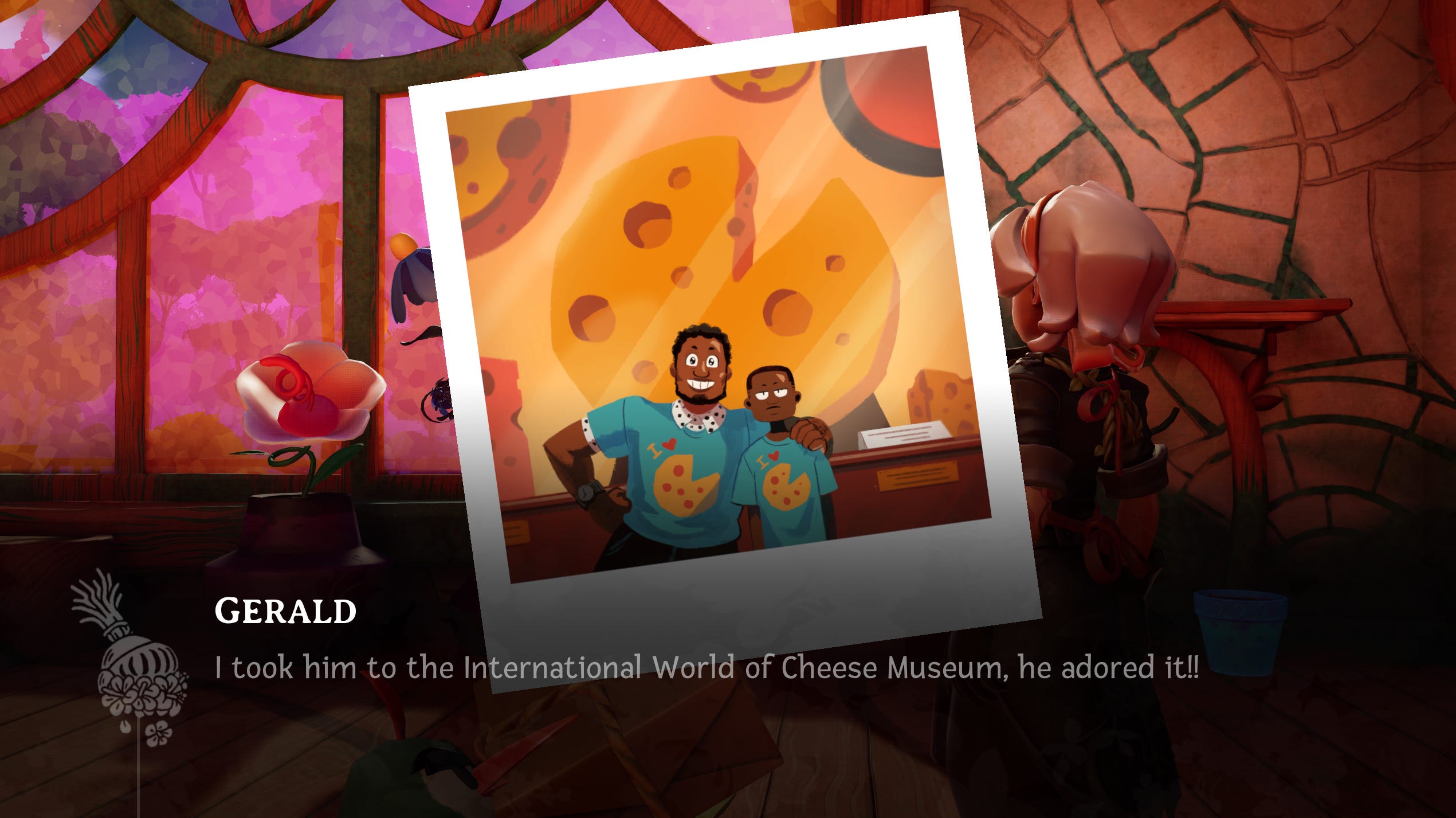
After she takes it to heart she begins to welcome guests to the shop. It becomes immediately apparent that every person arriving is troubled by their life’s pursuit: financial success, familial bonding, being bad at their job, etc. And in doing so, the game is trying to juxtapose a casual, social, cozy game with a story about why these games matter. Every interaction and dialogue choice serves the narrative with a humorous tone. I like Gerald.
But I'm constantly struck by the game’s lack of sublety. I would say it goes far enough to not trust its own audience. While it nails the atmosphere, setting, and gameplay while also reminding the player at every turn that this is a contrivance. You are outside of time, nothing matters here, work on yourself to move forward is the takeaway, but its a limited perspective.
Cozy games are not about escapism to me. I recognize this isn’t the mainstream, but this is definitely a “it’s the children that are wrong” scenario. These games are about simulation and value. The fact that Stardew Valley is on a timer is not about the impermanence of time: it’s about making choices and opportunity costs that ultimately don’t affect anything but emotions. But Wanderstop expects you to confront that choice at every turn. Why does a game need to impose this worldview? Like most creator-focused passion projects, it insists upon itself. If a game that begins with a glib affirmation as your first achievement—”“It will be okay. You have so, so much time."—is revelatory to you, play this game. But to me, the charm and polish has led me to look forward to Ivy Road’s future endeavors.